Every gated entrance in Pakistan, from a housing society gate to a hospital car park to a motorway toll plaza, faces the same question: how do you let the right vehicles in quickly and keep everyone else out? The answer is usually an automatic boom barrier. But when buyers ask about the boom barrier price in Pakistan, they quickly find that two barriers that look alike can be very different in speed, duty cycle, safety and identification. This guide explains the main types of boom barrier, what really decides the cost, and how to choose the right barrier for your site, based on what ASG Systems has learned automating vehicle entrances in Pakistan since 1997.
What is a boom barrier?
A boom barrier (also called a traffic barrier, barrier gate or boom gate) is a motorised arm that lifts to let a vehicle pass and lowers to block the lane again. The arm is driven by a motor and controller inside a steel cabinet. The barrier opens when it receives a signal from a guard push button, a remote, an RFID reader, an ANPR camera or a parking ticket system, and it closes automatically once the vehicle has safely passed.
A complete boom barrier lane is more than just the arm. It normally includes:
| Component | What it does |
|---|---|
| Barrier arm (boom) | Physically blocks the lane; can carry LED lights for night visibility |
| Cabinet, motor and controller | Lifts and lowers the arm and decides when to open or close |
| Traffic light | Red and green signals tell drivers when to stop and when to go |
| RFID reader or ANPR camera | Identifies authorised vehicles automatically |
| Safety photocells | An infrared beam stops the arm closing on a vehicle or person |
| Vehicle detection loop | A loop in the road senses the vehicle and keeps the arm up until it has passed |
Types of boom barrier and where each one fits
1. Standard automatic boom barrier
The most common choice for society gates, offices, hospitals and factories. It controls a single entry or exit lane, with anti-crush safety and a manual release so the gate can be opened by hand during a power failure. If your entrance handles a steady but moderate flow of cars, this is usually the right starting point.
2. High-speed boom barrier
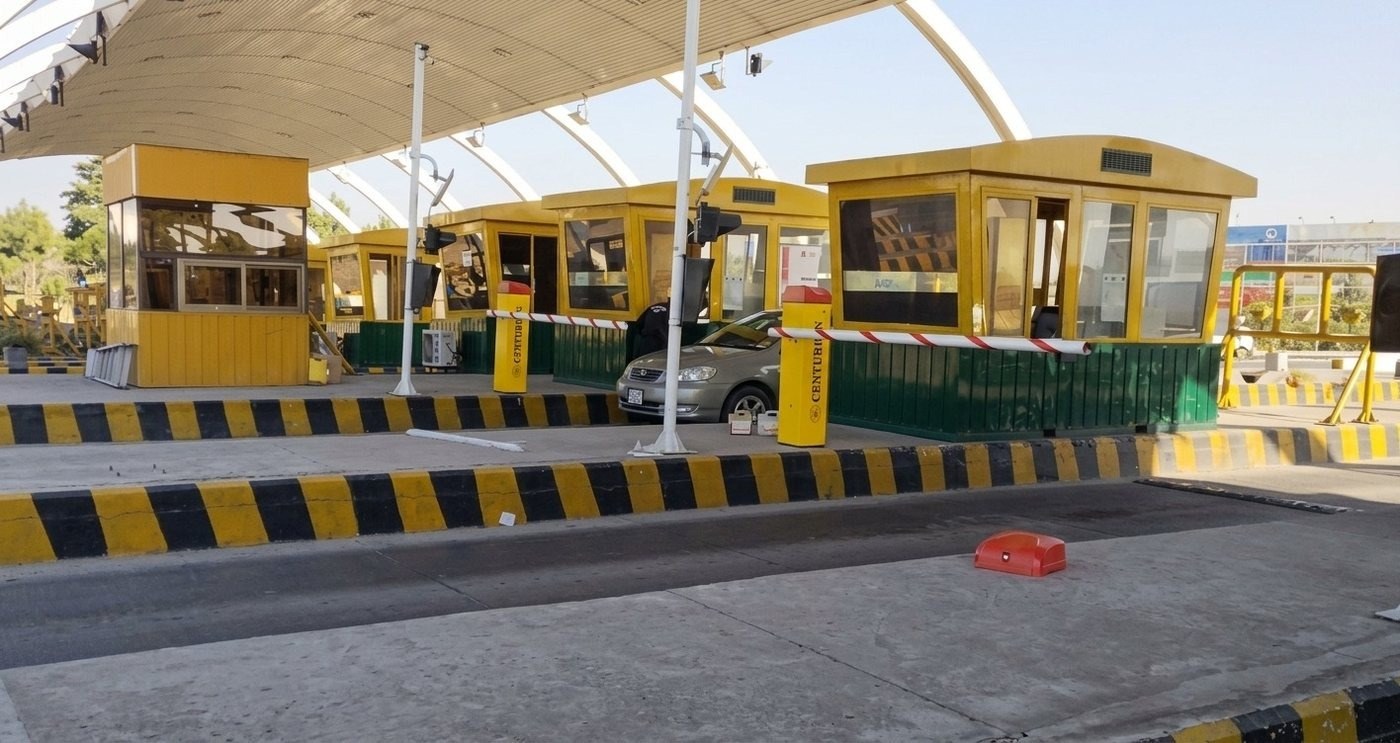
Built for toll plazas, highways and very busy lanes where every second counts. High-speed barriers have a rapid open-and-close cycle and are designed for continuous, high-cycle use all day and night. At the Islamabad Toll Plaza M-Tag Express Lanes, ASG Systems installed high-speed barriers with an open-and-close cycle of under 1.3 seconds.
3. Parking barrier gate
Used at mall, hospital, club and office car parks. A parking barrier is linked with ticket dispensers, card readers or RFID and with the parking management software, so every entry and exit is recorded and, where needed, charged. If you are planning a paid or monitored car park, read our guide to parking management system cost in Pakistan.
4. Long-arm barrier
For wide entrances or double lanes. The arm length is matched to the lane width, an arm rest supports the boom on the far side, and signal lights are fitted for both directions. Long arms need a stronger drive and careful balancing, which is one reason they cost more than a standard single-lane barrier.
| Barrier type | Best for | Key strength |
|---|---|---|
| Standard automatic | Society gates, offices, hospitals, factories | Reliable single-lane control with anti-crush safety and manual release |
| High-speed | Toll plazas, highways, busy lanes | Rapid cycle and continuous high-cycle duty |
| Parking barrier | Malls, car parks, clubs, hospitals | Works with tickets, cards, RFID and parking software |
| Long-arm | Wide or double lanes | Arm matched to lane width, arm rest and two-way signals |
What decides the boom barrier price in Pakistan?
There is no single price for a boom barrier, because the final cost depends on what the lane needs to do. When you compare quotations, check these five factors, because they explain most of the difference between a cheap barrier and one that lasts:
- Arm length. A short arm for a single lane needs a lighter drive. A long arm for a wide or double lane needs a stronger motor, an arm rest and careful balancing.
- Speed and duty cycle. A barrier that opens a few hundred times a day is very different from one that runs continuously at a toll plaza. High-speed, high-cycle barriers use heavier motors and controllers built for non-stop operation.
- Identification method. A push button or remote is the simplest. RFID long-range tags, ANPR number plate cameras, ticket dispensers and visitor management add hardware and software, but they also remove queues and give you a record of every vehicle.
- Accessories and safety. LED arm lights, red and green traffic lights, safety photocells, vehicle detection loops and battery or UPS backup all add to the cost, and all of them make the lane safer and more reliable.
- Civil work. Foundations, cable ducts, loop cutting, islands and guard booths depend on the site. A new entrance with no ducting costs more to prepare than one where the civil work is already in place.
Be careful with quotations that look much cheaper than others. They often leave out the safety photocells and detection loops, use a light-duty motor on a busy lane, or skip battery backup. In Pakistan, where load-shedding is common, a barrier without backup can leave your gate stuck open or closed during an outage.
RFID, ANPR or tickets: choosing how vehicles are identified
The barrier decides how fast the lane moves; the identification method decides who gets through. A typical automated entrance opens in about 3 to 6 seconds for an authorised vehicle, including identification. Common options are:
- RFID long-range tags: a tag on the windscreen is read from several metres away, so residents and staff drive through without stopping. This is the method behind e-tag lanes in housing societies.
- ANPR number plate recognition: a camera reads the plate, flags blacklisted vehicles and stores an entry photo for every vehicle.
- Ticket dispensers and card readers: the usual choice for car parks where visitors pay or are counted.
- Visitor passes: CNIC and number plate capture with time-limited access for guests and deliveries.
- Handheld remotes and guard push buttons: simple and low cost for small sites with a guard on duty.
Many sites combine methods: RFID for residents or staff, visitor passes for guests and ANPR for an audit trail. For a deeper look at the whole entrance, see our vehicle access and entrance automation solutions.
Safety features you should insist on
- Safety photocells: an infrared beam stops the arm closing if a vehicle or person is under it.
- Vehicle detection loops: keep the arm up until the vehicle has fully passed, and stop tailgating.
- Anti-crush safety: the arm reverses if it meets an obstacle.
- Traffic lights: clear red and green signals reduce confusion and accidents at the gate.
- Manual release: lets the guard open the barrier by hand in an emergency.
- Battery and UPS backup: keeps the barrier working through load-shedding.
Real projects: boom barriers by ASG Systems
- Islamabad Toll Plaza (2022): high-speed barriers for the M-Tag Express Lanes with an open-and-close cycle under 1.3 seconds, with technology partner Centurion.
- Khayaban-e-Amin, Lahore (2026): heavy-duty barriers with red and green lights on the community access road, with Centurion.
- Indus Hospital (2024): 2 boom barriers giving hospital security direct control of vehicle entry and exit and helping keep emergency lanes clear.
- DHA Raya Golf & Country Club: ticket dispensers, barriers and RFID access for members and guests in the club car park.
- Eighteen, Islamabad and Mall 1, Lahore: e-tag traffic barriers and parking access barriers.
How a boom barrier project works with ASG Systems
- Free site survey: our engineer checks lane width, traffic volume, power and civil conditions.
- Design and quotation: we recommend the barrier type, arm length, identification method and safety accessories, and give a clear quote.
- Civil work and installation: foundations, ducting, loops, barrier and controller installation.
- Testing and training: every safety feature is tested and your guards are trained.
- Maintenance: preventive maintenance, spare parts and responsive support from the same team.
Frequently asked questions
What is the price of a boom barrier in Pakistan?
The price depends on arm length, speed and duty cycle, the identification method, accessories and civil work. A simple single-lane barrier with a remote costs far less than a high-speed toll lane with RFID and ANPR. The quickest way to get an accurate figure is a free site survey and quotation.
Does a boom barrier work during load-shedding?
Yes, if it is fitted with battery or UPS backup. A manual release also lets the guard open the barrier by hand if needed.
How fast does a boom barrier open?
A typical automated entrance lets an authorised vehicle through in about 3 to 6 seconds including identification. High-speed toll barriers are much faster; at Islamabad Toll Plaza the open-and-close cycle is under 1.3 seconds.
Can a boom barrier work with RFID tags for a housing society?
Yes. Long-range RFID tags are read from several metres away, so residents drive through without stopping, while visitors are handled with passes or a guard button.
Do you install boom barriers outside Lahore?
Yes. ASG Systems works from Lahore, Islamabad and Karachi and installs across Pakistan, including Multan, Sialkot, Gujranwala, Rawalpindi, Peshawar, DHA and Bahria Town.
Get a free boom barrier survey and quote
Tell us about your entrance and traffic, and our engineer will recommend the right barrier, arm length, identification and backup for your site. Explore our boom barrier and traffic barrier range, or request a free site survey today. You can also call or WhatsApp us on +92-301-8451902.
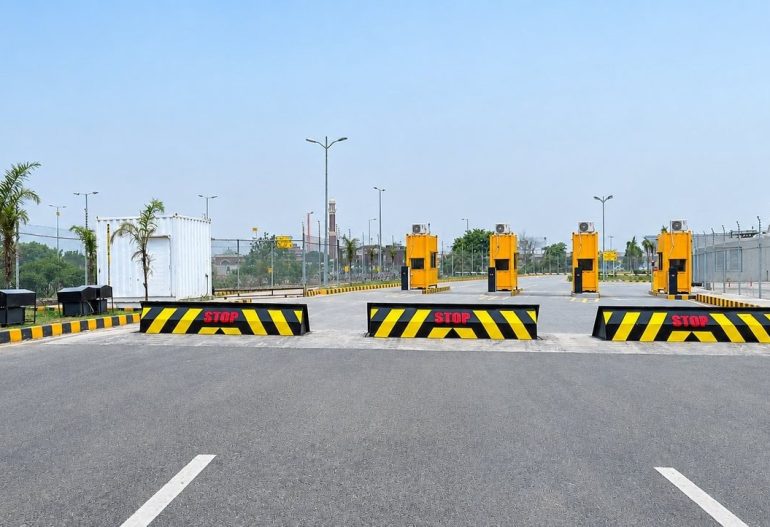
Related: for high-security entrances, compare boom barriers with a road blocker in Pakistan and bollards in Pakistan.

One Comment