Fire & Life Safety Systems in PakistanDetect Early. Alert Everyone. Save Lives.
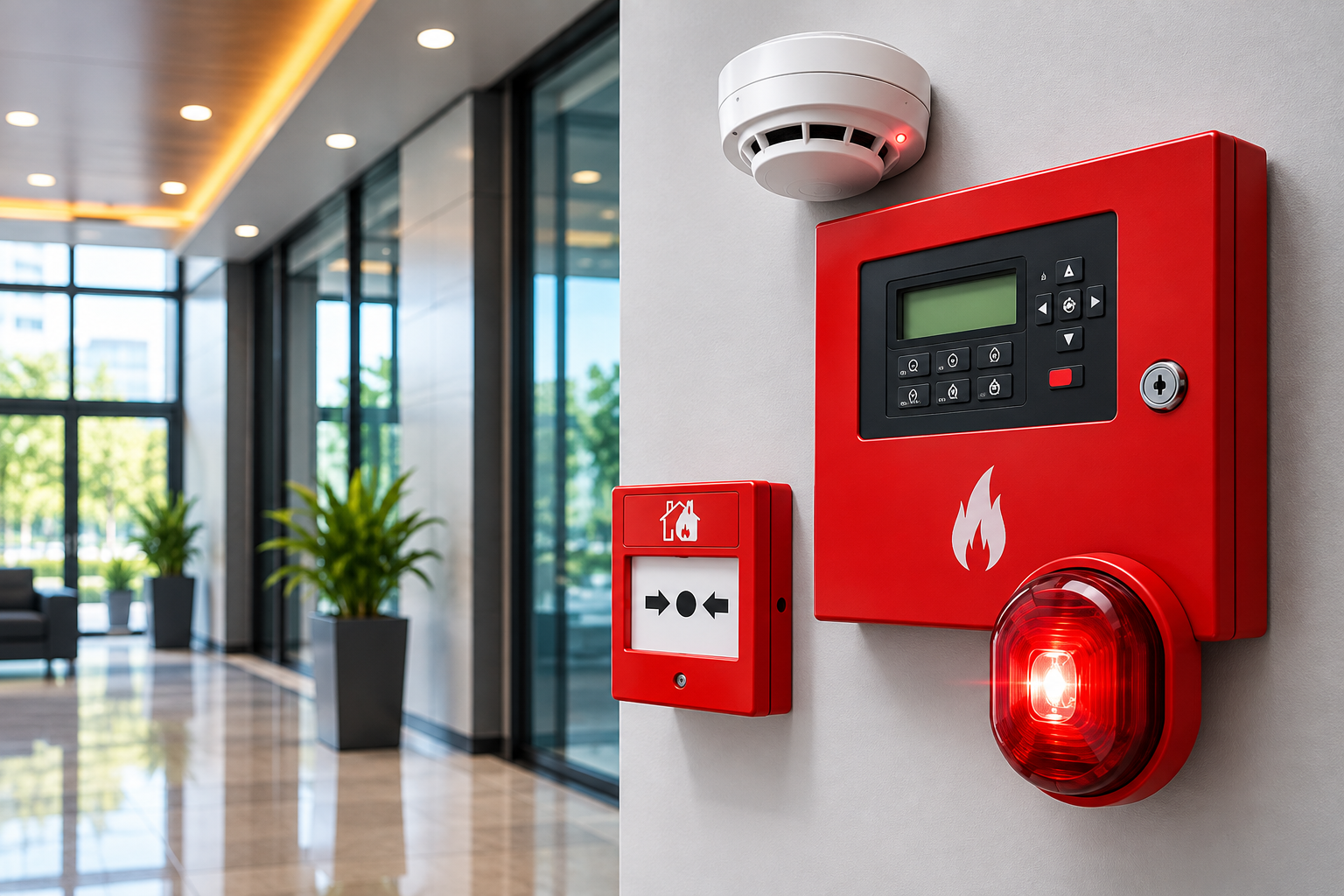
ASG Systems designs, installs and maintains complete fire and life safety systems: fire detection, conventional and addressable fire alarm systems, and emergency systems such as voice evacuation, emergency lighting, exit signage and suppression interfaces. Every second counts in a fire, and our systems are engineered to give people those seconds.
- Professional design and installation
- Conventional and addressable systems
- Testing, commissioning and AMC
- Early warning from smoke, heat, flame and gas detectors
- Exact device and location on addressable panels
- Sounders, strobes and voice evacuation for every floor
- Lifts, HVAC, doors and suppression linked to the panel
Fire and life safety
What is a fire and life safety system?
A fire and life safety system is the network of detectors, alarm panels, notification devices and emergency equipment that finds a fire at its earliest stage, warns everyone in the building and helps them escape safely.
Detectors sense smoke, heat, flame or gas and report to the fire alarm control panel. The panel then follows a programmed cause-and-effect plan: it sounds alarms and strobes, plays voice evacuation messages, lights the escape routes, recalls lifts, shuts down air handling units, releases fire doors, unlocks access-controlled doors and signals the sprinkler or gas suppression system and your security team.
A well-designed system protects lives first, then property and business continuity. It is also a key requirement of building codes, civil defence authorities, insurers and international clients in Pakistan and around the world.
Detect. Alert. Evacuate. Respond. One integrated system that turns minutes of confusion into seconds of clear action.
How it works
From the first wisp of smoke to a safe evacuation
Watch a fire in a store room. The detector finds it early, the panel pinpoints it, everyone is warned and guided out, and the building responds automatically.
- DetectSmoke reaches the detector and the panel shows the exact location.
- AlertSounders, strobes and mobile alerts activate on every floor.
- EvacuateExit signs and emergency lights guide people to the stairs.
- RespondSprinklers control the fire and the fire brigade is called.
Our fire and life safety solutions
Fire detection, fire alarm and emergency systems
Three layers that work as one, designed, supplied, installed and maintained by ASG Systems for commercial, industrial, public and residential buildings.
 Detection
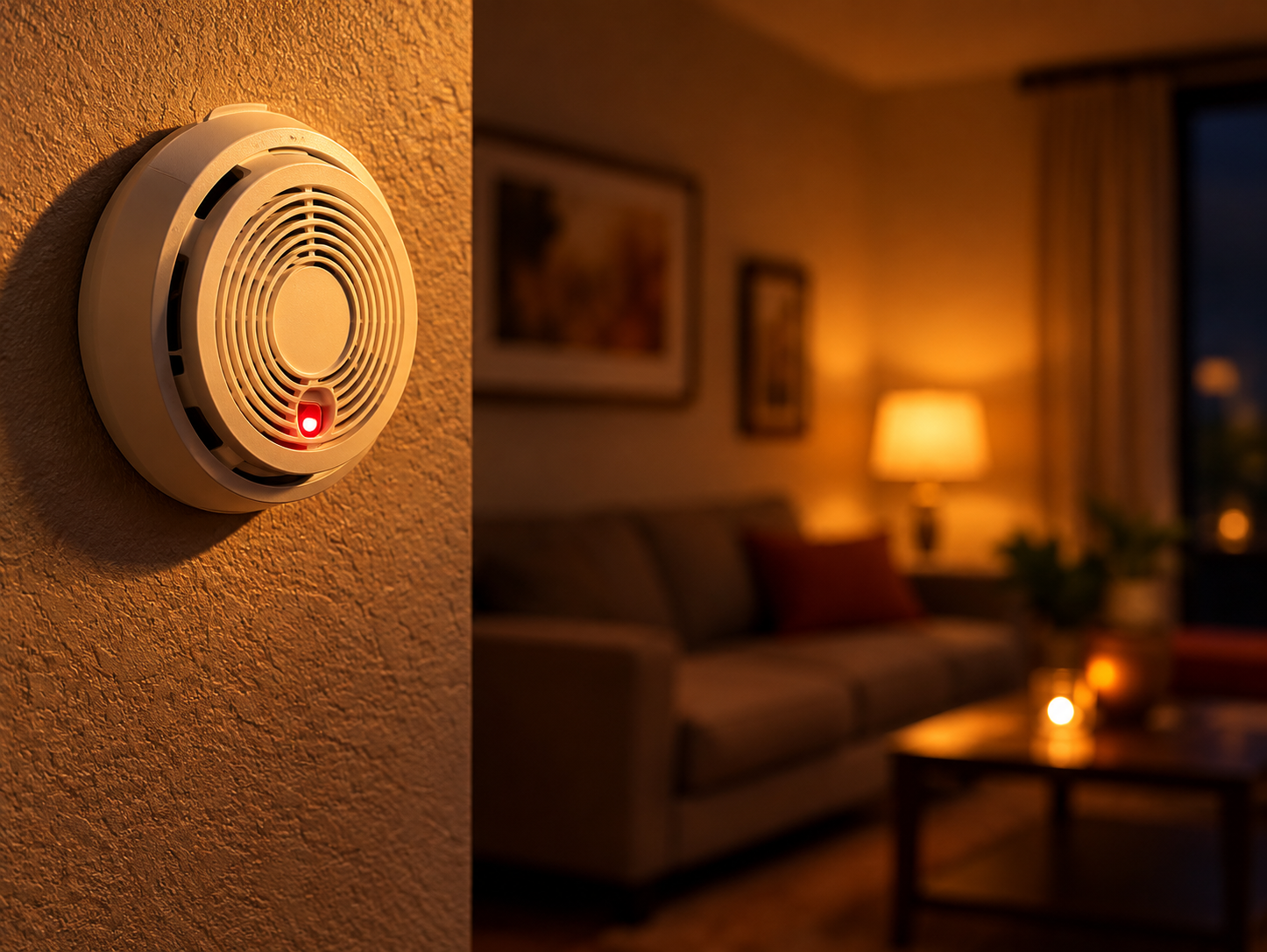
Fire detection
The right detector for every room, risk and ceiling height.
Smoke and multi-sensor detectors
Optical smoke, heat and multi-sensor detectors for offices, hotels, hospitals and homes, with fewer false alarms.
Heat detectors
Fixed-temperature and rate-of-rise detectors for kitchens, car parks, plant rooms and dusty areas.
Beam and aspirating detection
Optical beam detectors for warehouses and atria, and aspirating smoke detection for data centres and clean rooms.
Flame and gas detection
UV/IR flame detectors and gas and carbon monoxide detectors for fuel stores, generators, kitchens and industry.
 Alarm
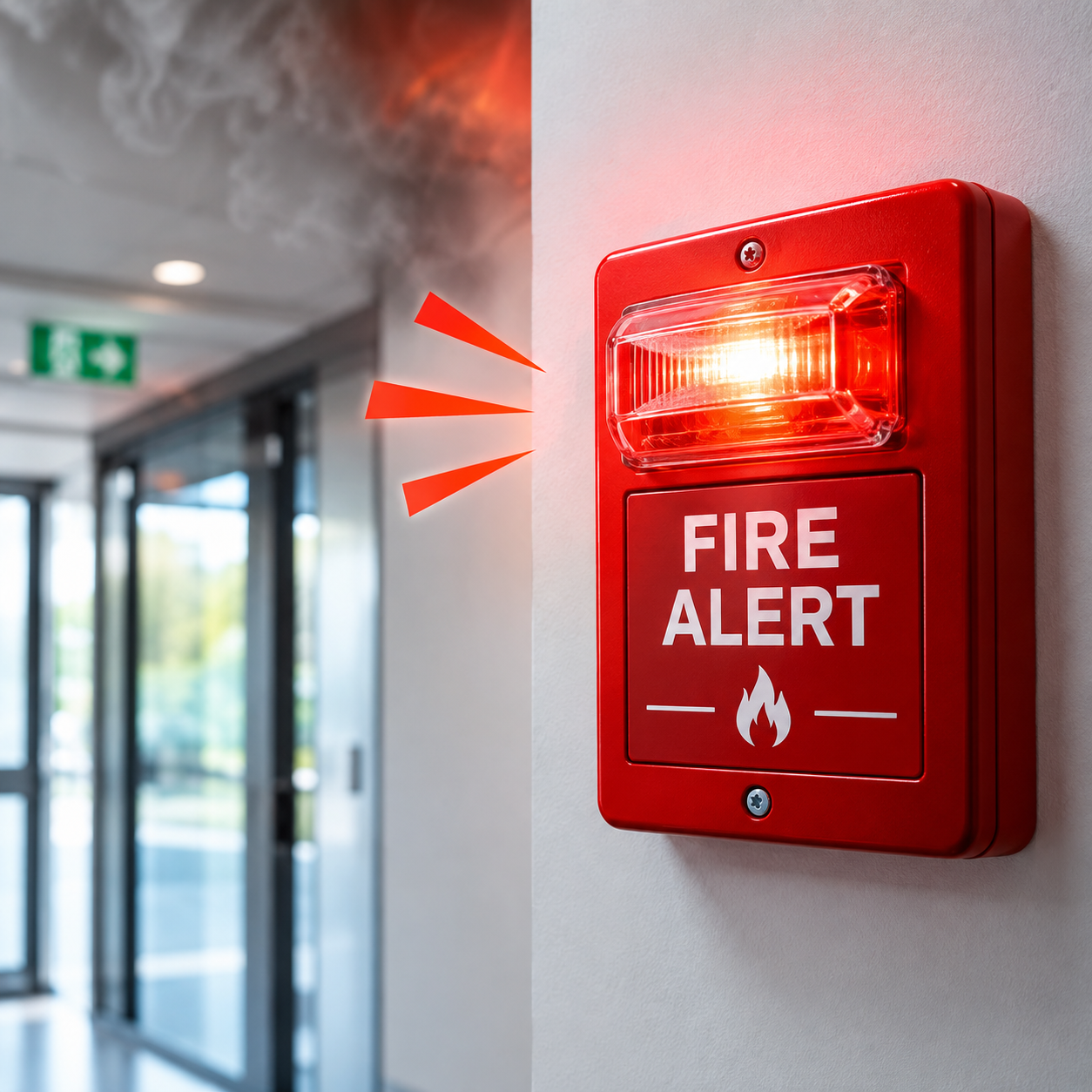
AlarmFire alarm systems
From a single shop to a multi-tower campus.
Conventional fire alarm systems
Zone-based panels that are simple and cost-effective for small buildings, shops, schools and homes.
Addressable fire alarm systems
Intelligent panels that show the exact device and location, with networked panels, repeaters and graphics software for large sites.
Manual call points, sounders and strobes
Call points on escape routes, and sounders, beacons and visual alarm devices so everyone is warned, including people with hearing loss.
Wireless and hybrid systems
Wireless detectors and devices for heritage buildings, retrofits and sites where cabling is difficult.
 Emergency
Emergency systems
Guiding people out and making the building respond.
Voice evacuation and PA
Clear, pre-recorded and live voice messages by zone, for phased and staged evacuation of large buildings.
Emergency lighting and exit signage
Battery-backed emergency lights and illuminated exit signs that keep escape routes visible when the power fails.
Sprinkler and suppression interfaces
Monitoring of sprinkler flow and valves, and release control for clean-agent gas suppression in server and electrical rooms.
Building interfaces and mobile alerts
Lift recall, HVAC shutdown, smoke control, door release and access control unlock, with SMS and app alerts to your team.
Fire detection technology
Every detector, animated
Different fires behave differently. See how each detection technology works, and why choosing the right one matters.
Compare
Conventional vs addressable fire alarm systems
Both protect lives. The difference is how precisely they tell you where the fire is, and how well they scale.
Conventional fire alarm
Detectors are wired in zones. The panel shows which zone is in alarm, and staff search that zone for the device.
- Lower cost for small buildings
- Simple to operate and maintain
- Best for shops, small offices, schools and homes
Addressable fire alarm
Every device has its own address on a loop. The panel shows the exact detector and room, and monitors each device’s health.
- Exact location for faster response
- Loop wiring that keeps working if a cable is cut
- Best for hospitals, hotels, malls, factories and high-rises
| Feature | Conventional | Addressable |
|---|---|---|
| Alarm location | Zone only | Exact device, room and floor |
| Wiring | Radial circuit per zone | Loop with isolators, fewer cables |
| Device monitoring | Basic fault per zone | Each device checked for faults and dirt |
| Cause and effect | Simple, zone-based outputs | Fully programmable by device, zone or time |
| Scalability | Small to medium buildings | Large buildings and networked campuses |
| Integration | Relays to other systems | BMS, graphics software, voice evacuation and remote monitoring |
Emergency systems in action
Guiding people out, automatically
When the alarm sounds, emergency systems take over: they light the way, speak clear instructions and protect critical rooms.
Design and maintenance
Designed with care, maintained for life
A fire alarm is only as good as its design and upkeep. We plan every detail carefully and keep your system ready every day of the year.
- Careful system designDetector layouts, cable routes and battery calculations planned for each room and risk.
- Authority and insurer approvalsDrawings, cause-and-effect matrices and test reports for civil defence, consultants and insurers.
- Testing and commissioningEvery detector, call point, sounder and interface tested and documented before handover.
- Maintenance contractsScheduled inspections, detector cleaning and battery checks, with fast emergency support.
Recommended care plan
- WeeklyTest a different manual call point and check the panel is normal.
- MonthlyCheck emergency lighting, standby batteries and the fault log.
- Every 6 monthsProfessional service of detectors, sounders, interfaces and panel.
- Every yearFull inspection, test report and system health review.
Who we protect
Fire and life safety for every type of building
Each building has its own fire risks, occupants and escape routes. We design around all three.
Offices and high-rises
Addressable systems with phased voice evacuation, lift recall and pressurisation control.
Hospitals and clinics
Staged alarms and progressive evacuation that protect patients who cannot move quickly.
Hotels and hospitality
Room detectors, sounder bases and voice messages that wake and guide sleeping guests.
Shopping malls and retail
Beam detection for atria, voice evacuation and smoke control for crowded public spaces.
Factories and industry
Heat, flame and gas detection for production lines, boilers, stores and hazardous areas.
Warehouses and logistics
Beam and aspirating detection for high racking and large open floors.
Data centres and server rooms
Very early warning aspirating detection with clean-agent gas suppression.
Schools and universities
Reliable, easy-to-manage systems for classrooms, labs, hostels and auditoriums.
Homes and apartments
Smoke, heat and gas detectors with mobile alerts for villas and residential towers.
Our process
From fire risk survey to a safe handover
One accountable team for design, installation, commissioning and lifetime service.
- 01
Site survey and fire risk review
We study the building, occupancy, escape routes, high-risk rooms and your authority or insurer requirements.
- 02
System design and cause and effect
We prepare device layouts, cable routes, battery calculations and a cause-and-effect matrix, with a clear quotation.
- 03
Supply and installation
Our teams install fire-rated cabling, panels, detectors, call points, sounders, emergency lighting and interfaces.
- 04
Testing and commissioning
Every device and interface is tested, programmed and documented, and your staff are trained on the panel.
- 05
Maintenance and AMC
Scheduled servicing, detector cleaning, battery replacement and 24/7 emergency support keep the system ready.
Why ASG Systems
Why choose ASG Systems for fire and life safety
Life safety engineered, installed and supported by one experienced team.
Expert design
Every layout planned around your building, occupants and escape routes.
Fully integrated
Fire alarm linked with BMS, access control, CCTV, lifts and HVAC.
Quality products
Reliable detectors, panels and notification devices chosen for each project.
Experience since 1997
Decades of delivering safety and building technology projects.
Fire and life safety across Pakistan
We design and install fire detection, fire alarm and emergency systems in Lahore, Karachi, Islamabad, Rawalpindi, Faisalabad, Multan, Peshawar, Sialkot, Gujranwala, Hyderabad and Quetta, and take on fire safety projects anywhere in Pakistan and for international clients.
FAQs
Fire and life safety FAQs
Answers to the questions building owners, facility managers and consultants ask us most.
What does a fire and life safety system include?
It includes fire detection (smoke, heat, flame and gas detectors), a fire alarm control panel, manual call points, sounders and strobes, and emergency systems such as voice evacuation, emergency lighting, exit signage and interfaces to sprinklers, suppression, lifts, HVAC and doors.
What is the price of a fire alarm system in Pakistan?
The cost depends on the building size, number of floors and rooms, conventional or addressable technology, detector types, voice evacuation, emergency lighting and integrations. ASG Systems provides a free site survey and a detailed quotation.
Should I choose a conventional or addressable fire alarm?
Conventional systems suit small buildings with a few zones. Addressable systems show the exact device in alarm, monitor each device and scale to large, complex buildings, so they are recommended for hospitals, hotels, malls, factories and high-rises.
Which fire detector should be used in each area?
Optical smoke or multi-sensor detectors suit most rooms and corridors. Heat detectors suit kitchens, car parks and dusty areas. Beam detectors protect high roofs, aspirating systems protect data centres, and flame and gas detectors protect fuel and gas risks.
How do you design a fire alarm system?
We survey the building, study its occupants, escape routes and high-risk rooms, then plan detector types, device layouts, cabling, battery backup and the cause-and-effect programme, and meet the requirements of local authorities, consultants and insurers for each project.
Does the fire alarm work during a power cut?
Yes. Fire alarm panels have standby batteries sized to keep the system running for many hours and then sound the alarm, and emergency lights have their own batteries to light escape routes.
What is voice evacuation and why is it better than bells?
Voice evacuation plays clear spoken instructions through speakers. People respond faster to a spoken message than to a bell, and messages can be different for each floor to allow phased evacuation.
Can the fire alarm connect to lifts, HVAC and access control?
Yes. Through the cause-and-effect programme, the panel can recall lifts, shut down air handling units, operate smoke dampers, release fire doors, unlock access-controlled doors and signal your BMS and security team.
How often should a fire alarm system be tested?
We recommend a weekly call point test by your staff, monthly checks of emergency lighting and batteries, a professional service every six months and a full inspection with a report every year.
Can I receive fire alarm alerts on my phone?
Yes. With a monitoring gateway, fire and fault alarms can be sent by SMS, app notification or to a monitoring centre, so owners and managers are informed wherever they are.
Protect the People Inside Your Building
Book a free site survey with ASG Systems. We will design a fire detection, fire alarm and emergency system that detects early, alerts everyone and guides them to safety.
