
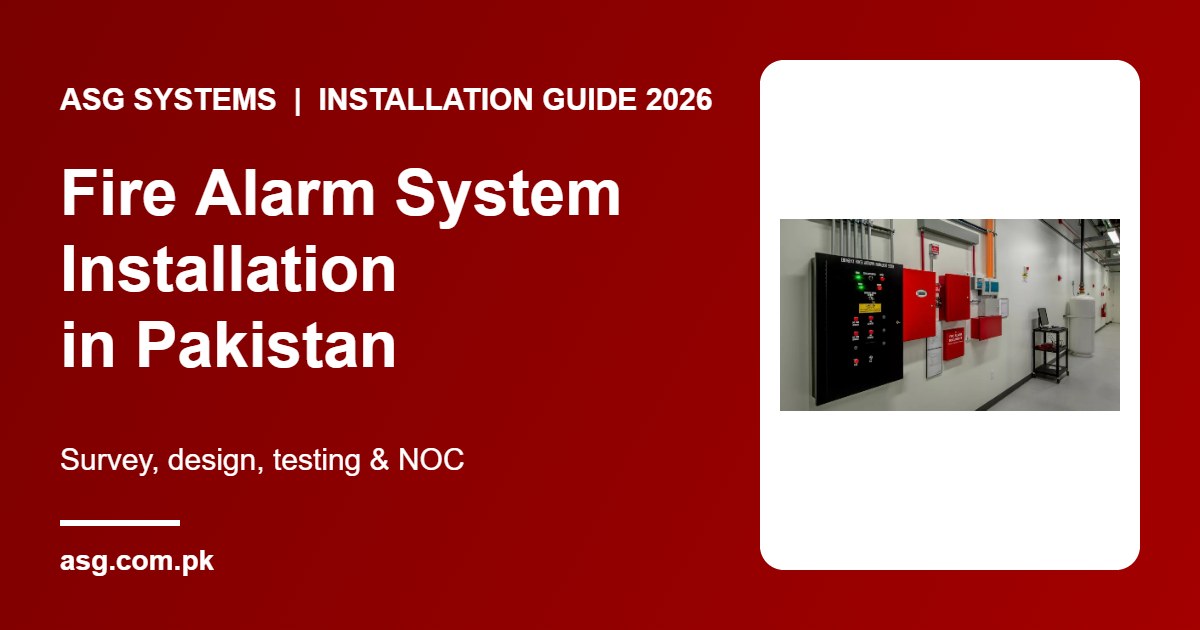
A fire alarm system only saves lives if it is designed and installed properly. In Pakistan, many buildings have smoke detectors on the ceiling, but no one has tested whether the panel, the cabling and the sounders actually work together. In January 2026, a survey reported that only one of Rawalpindi’s 163 high-rise buildings had a fully functional automatic fire safety system. This guide explains how professional fire alarm system installation in Pakistan should be done, step by step, and what building owners should check before they sign off.
Why fire alarm installation matters more than the equipment
Two buildings can buy the same detectors and panel and get completely different results. The difference is in the design and installation: where each detector is placed, how the zones are planned, which cable is used, and whether the system is tested and handed over with proper records. A badly installed system gives false alarms, gets switched off by staff, and then fails on the one day it is needed.
Fire safety rules in Pakistan are getting stricter
After several deadly fires, provinces are tightening enforcement. In February 2026, the Sindh Building Control Authority made fire NOCs from civil defence and fire services mandatory for commercial and industrial buildings, and certified fire-safety MEP drawings must now be submitted before final approval. In Punjab, authorities have surveyed high-rises under the Punjab Community Safety Building Regulations and served notices on buildings with fire safety lapses. For owners, this means a fire alarm system is no longer optional, and it must be designed and documented properly.
Step-by-step: how a fire alarm system is installed
1. Site survey and risk assessment
The engineer walks the building and notes room sizes, ceiling heights, false ceilings, kitchens, generator rooms, server rooms, stairs and escape routes. The type of occupancy matters: a hospital, a factory and an office need different coverage and evacuation strategies.
2. System design to a recognised standard
Projects in Pakistan are usually designed to NFPA 72 (American) or BS 5839-1 (British). The design decides the number and type of detectors, the zones or loops, the position of manual call points and sounders, and how the system connects to other equipment such as lifts, fire dampers, access control doors and the generator.
3. Choosing conventional or addressable
A conventional system divides the building into zones and tells you which zone has a fire. It costs less and suits shops, small offices and houses. An addressable system shows the exact detector and room, which saves critical minutes in large buildings such as hospitals, malls, hotels, high-rises and factories. Read more on our fire and life safety systems page.
4. Selecting the right detectors
- Smoke detectors for offices, rooms, corridors and stores.
- Heat detectors for kitchens, generator rooms and dusty areas where smoke detectors give false alarms.
- Multi-sensor detectors where both smoke and heat need to be monitored.
- Beam detectors for warehouses and halls with high ceilings.
See the range of smoke and heat detectors and fire alarm panels we supply.
5. Cabling and installation
Fire alarm circuits should use fire-resistant cable, run in proper conduit or trunking and kept separate from power cables. The control panel goes in a supervised place such as the reception or security room, with a battery backup so the system keeps working during load-shedding. Manual call points are fixed at exits and stair landings, and sounders and strobes are placed so the alarm can be heard and seen everywhere.
6. Testing, commissioning and handover
Every detector and call point is tested one by one, sounder levels are checked, battery backup is tested, and the cause-and-effect (what happens when each device activates) is verified. The owner should receive as-built drawings, a device list, test certificates and training for the staff who will respond to alarms. These documents are also what fire departments and civil defence ask for when issuing an NOC.
7. Maintenance
Dust, humidity and construction work affect detectors in Pakistan’s climate. A maintenance plan with regular testing, detector cleaning and battery checks keeps the system reliable and avoids false alarms that make people ignore the alarm.
What decides the cost of fire alarm installation?
- Building size, number of floors and number of rooms.
- Conventional or addressable system, and the brand of panel and detectors.
- Number and type of detectors, call points, sounders and strobes.
- Cable length and whether conduit and false-ceiling work is needed.
- Integration with lifts, access control, sprinklers or a building management system.
- Documentation needed for NOC approval, and the maintenance plan.
Because every building is different, a site survey is the only way to get an accurate price. Be careful with quotations that only list a few detectors and a panel without design, cabling, testing or documentation.
Common mistakes to avoid
- Installing smoke detectors in kitchens or generator rooms, which causes constant false alarms.
- Using ordinary PVC cable instead of fire-resistant cable.
- No battery backup, or batteries that are never replaced.
- Panels placed in a locked room where no one hears or sees the alarm.
- No as-built drawings or test records, which delays NOC approval.
Fire alarm installation by ASG Systems
ASG Systems has designed and installed security and life safety systems across Pakistan since 1997, with offices in Lahore, Islamabad and Karachi. Our engineers survey the site, design the system, install it with the right cabling, test every device and hand over full documentation, then maintain it for life. We can also connect your fire alarm to access control so doors release automatically during an evacuation.
Need a fire alarm system or an upgrade for NOC approval? Contact ASG Systems for a free site survey and quotation.
Frequently asked questions
Is a fire alarm system required by law in Pakistan?
Requirements depend on the province and building type. Commercial, industrial and high-rise buildings need fire safety approvals, and in Sindh fire NOCs and certified fire-safety drawings are now mandatory for commercial and industrial buildings. A properly designed fire alarm system is a core part of meeting these requirements.
How long does fire alarm installation take?
It depends on the building. A small office or shop can often be completed in a few days, while hospitals, malls and multi-storey buildings take longer because of cabling, integration and testing.
Which is better, conventional or addressable?
Conventional systems are cost-effective for small buildings. Addressable systems pinpoint the exact device in alarm and are the better choice for large or multi-storey buildings.
Does a fire alarm work during load-shedding?
Yes, if it is installed correctly. Fire alarm panels have standby batteries that keep the system running when the power goes out. The batteries must be tested and replaced on schedule.
How often should a fire alarm system be serviced?
Follow the standard used in the design and the manufacturer’s guidance. As a minimum, the system should be tested regularly and inspected by a qualified technician on a planned schedule, with records kept for the fire department.
