When a building owner in Pakistan decides to control vehicles at the gate, the first question is usually: should we install a road blocker, bollards or a boom barrier? All three control vehicle entry, but they do very different jobs. A boom barrier manages traffic, a road blocker physically stops a vehicle across the whole lane, and bollards protect an area while still letting people walk through. Choosing the wrong one can leave a site under-protected, or spend money on security it does not need. This guide compares the three side by side and shows how real sites combine them.
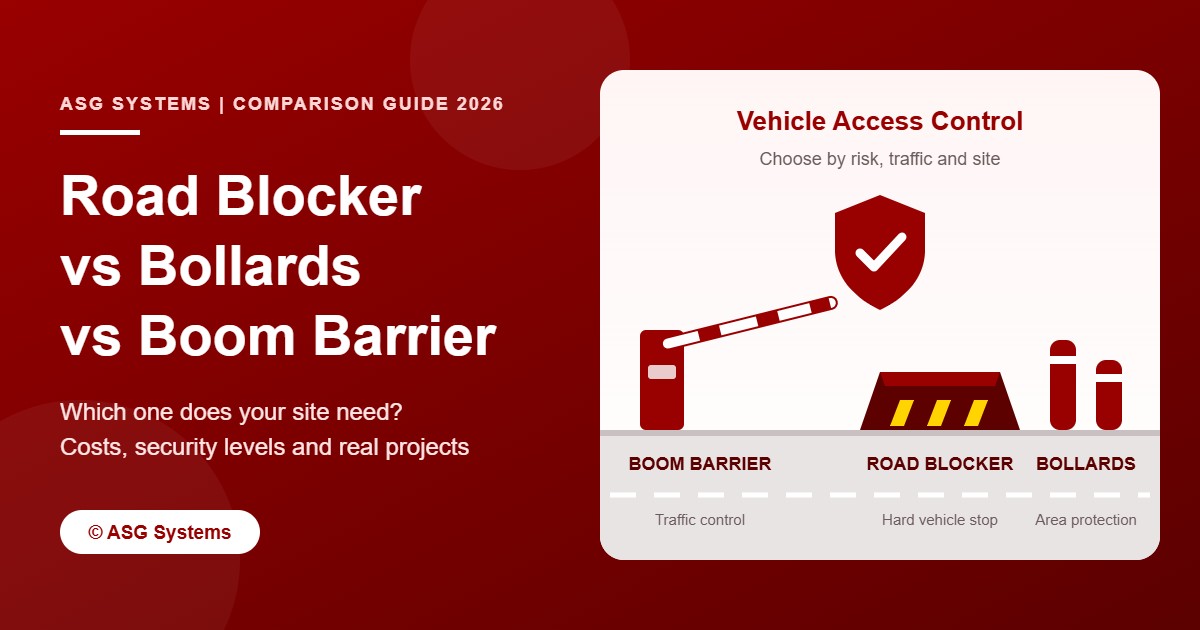
The short answer
- Boom barrier: for everyday traffic control at parking, societies, offices and toll lanes. Fast and affordable, but it does not stop a vehicle that drives through it.
- Road blocker: for high-security gates where a vehicle must be physically stopped, such as government buildings, banks, airports and military sites.
- Bollards: for protecting building fronts, plazas and pedestrian areas, or for a clean-looking secure entrance where people pass between the posts.
Many high-security entrances use all three together: a boom barrier for normal traffic, a road blocker as the hard stop behind it, and bollards along the pedestrian side.
Road blocker vs bollards vs boom barrier: comparison table
| Feature | Boom barrier | Road blocker | Bollards |
|---|---|---|---|
| Main purpose | Traffic and access control | Physically stopping vehicles | Protecting areas, flexible access |
| Stops a vehicle forcing through? | No | Yes (crash-rated models) | Yes (crash-rated models) |
| Pedestrians can pass | Yes, beside the arm | No, across the full lane | Yes, between the posts |
| Opening speed | Fast, a few seconds | A few seconds; emergency fast mode on some models | A few seconds (automatic) |
| Civil work | Small base | Pit across the lane | Pit for each automatic bollard |
| Relative cost | Lowest | Higher | Medium to highest (depends on number and rating) |
| Typical sites | Car parks, societies, offices, toll plazas | Government, banks, airports, embassies, defence | Building fronts, malls, plazas, embassies |
Boom barriers: the everyday gatekeeper
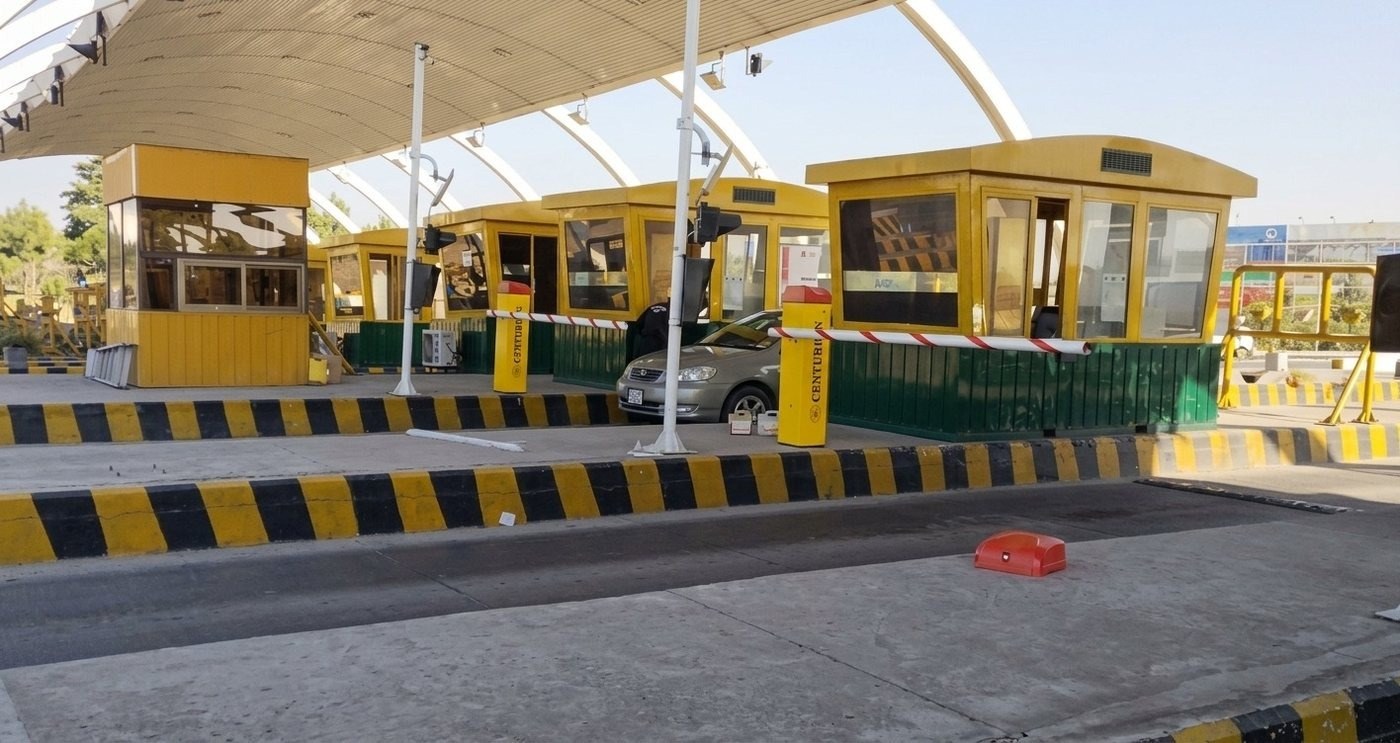
A boom barrier is a motorised arm that lifts to let authorised vehicles pass. Linked with RFID e-tags, ANPR cameras, ticket dispensers or a guard’s push button, it keeps traffic organised and records who came in. It is the right choice wherever the goal is control and convenience, not stopping an attack. Its limit is simple: a driver who wants to force entry can drive through the arm. For costs, see our boom barrier price in Pakistan guide.
Road blockers: the hard stop
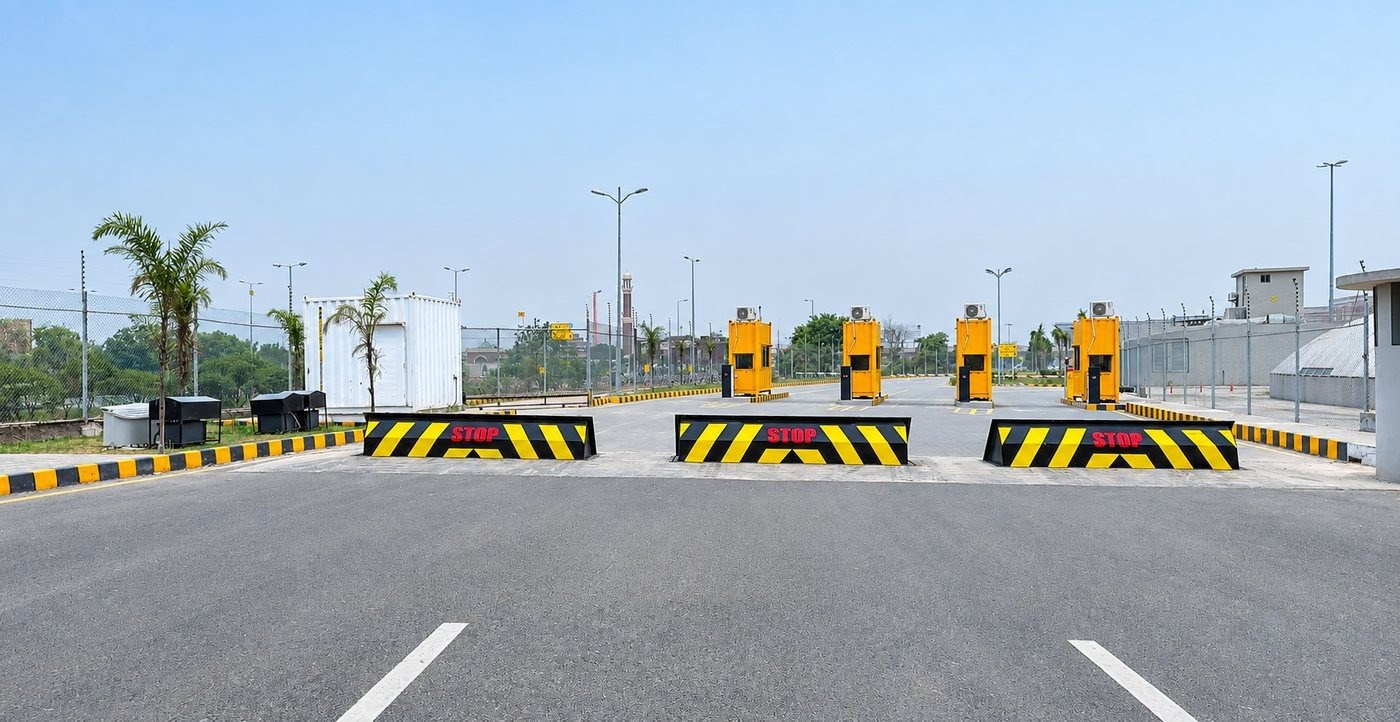
A hydraulic road blocker is a heavy steel plate that rises from the road across the full lane. When it is up, a vehicle cannot pass. Crash-rated road blockers are tested to stop a vehicle of a given weight at a given speed, and many have an emergency fast operation mode that raises the plate within one to two seconds when a guard presses the panic button. Road blockers suit sites where a vehicle attack is a real risk: government buildings, banks, embassies, airports, oil and gas facilities and defence sites. They need a pit across the lane, drainage and a hydraulic power unit, so they cost more than a boom barrier. See our road blocker price guide for what decides the cost.
Bollards: protection with flexibility
Bollards are posts set in a row. Fixed bollards protect a building front, a glass facade or a pedestrian area permanently, while automatic bollards rise and lower to let authorised vehicles through. Because people can walk between them, bollards are popular at malls, plazas and building entrances where a solid barrier would look unwelcoming. Crash-rated anti-ram bollards give the same stopping power as a road blocker with a more open look. Read our bollard price in Pakistan guide for a cost comparison of the different types.
How to choose: five questions
- What is the threat? If it is only unauthorised parking or traffic, a boom barrier is enough. If a vehicle could be used to force entry or attack, you need a road blocker or crash-rated bollards.
- How many vehicles pass each hour? Busy lanes need fast barriers and good identification, such as e-tags or ANPR, so queues do not form.
- Do pedestrians share the entrance? If yes, bollards or a separate pedestrian lane with turnstiles keep them safe and moving.
- What does the site look like? Bollards and shallow-mount road blockers suit modern frontages; deep pits may not be possible over underground services.
- What happens in an emergency? Plan emergency fast operation, manual release and UPS backup for load-shedding before you choose.
Real examples from ASG Systems projects
- Allama Iqbal International Airport, Lahore: 8 traffic barriers and 4 road blockers at the vehicle checkpoint, combined with screening and Pakistan’s first camera-based parking management system.
- NDMA Headquarters, Islamabad: automatic boom barriers with a hydraulic road blocker as the high-security backstop, plus a turnstile for pedestrians.
- Islamabad Toll Plaza: fast boom barriers for express lanes, where speed and reliability matter most.
Each site used the barrier that matched its risk and traffic, which is exactly how the choice should be made.
Common mistakes to avoid
- Relying on a boom barrier alone at a site that needs real vehicle protection.
- Buying an “equivalent” barrier described as crash-proof without a crash test certificate.
- Forgetting drainage for road blocker and bollard pits before the monsoon.
- No UPS or manual release, so the gate is stuck during load-shedding.
- Leaving no safe path for pedestrians at a busy vehicle entrance.
Get the right barrier for your site
Since 1997, ASG Systems has supplied, installed and maintained boom barriers, road blockers and bollards across Pakistan, from offices in Lahore, Islamabad and Karachi. We survey the site, assess the risk and traffic, and design the right combination as part of a complete vehicle access and entrance automation system. Contact ASG Systems for a free site survey.
Frequently asked questions
What is the difference between a road blocker and a boom barrier?
A boom barrier is a lifting arm that controls traffic but does not stop a vehicle that forces through. A road blocker is a steel plate that rises across the whole lane and physically stops vehicles, which is why it is used at high-security gates.
Are bollards better than a road blocker?
Neither is better in every case. Crash-rated bollards and road blockers can both stop vehicles. Bollards let pedestrians pass and look more open, while a road blocker covers the full lane with one unit and is often simpler at a single vehicle gate.
Can a boom barrier and road blocker be used together?
Yes. Many high-security entrances use a boom barrier for everyday traffic and a road blocker behind it as the hard stop, controlled from the same guard room and access control system.
Which barrier is best for a housing society?
Most housing societies use boom barriers with RFID e-tags for residents and a visitor lane for guests. Road blockers or bollards are added only where a higher security level is needed.