
Bollards are one of the simplest ways to stop vehicles from entering a gate, a building front or a pedestrian area. But when buyers search for the bollard price in Pakistan, they rarely find a clear answer. Most suppliers show “price on request”, and the quotations they receive can be very far apart. The reason is simple: a bollard can be a painted steel pipe set in concrete, or a crash-rated hydraulic system that rises in a few seconds and is linked to access control. This guide explains the types of bollards, what really decides the price, the hidden costs to check, and how to get an accurate quotation.
Bollard price in Pakistan: the quick answer
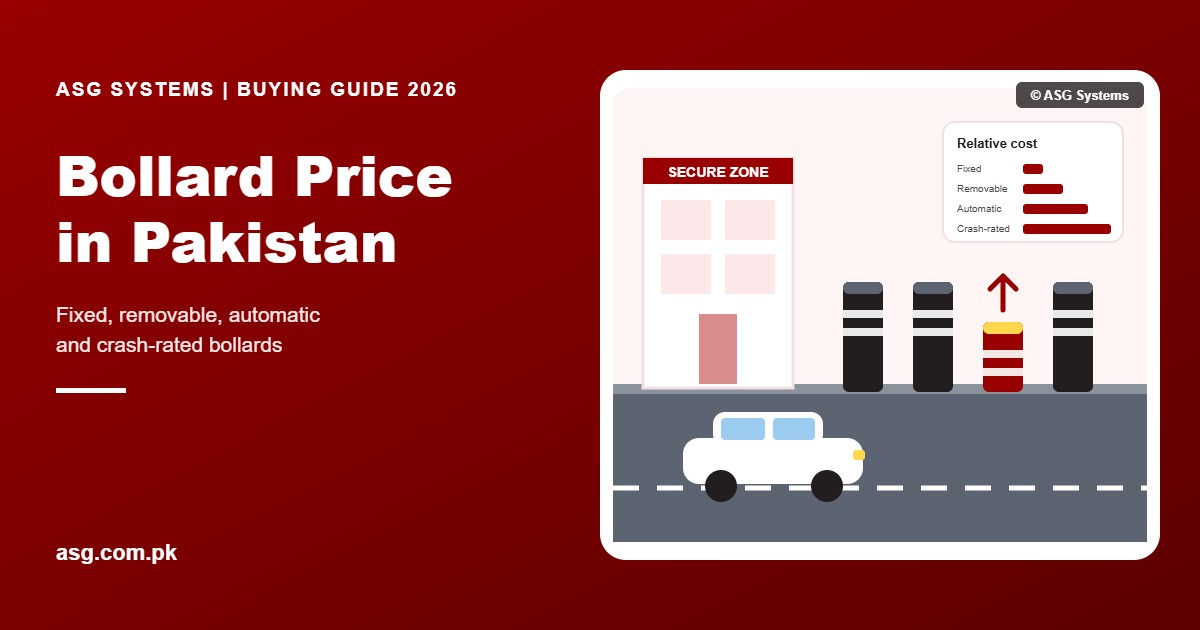
There is no single price, because the type of bollard changes the cost more than anything else. The table below compares the main types by relative cost, so you can see where your project is likely to sit before you ask for quotes.
| Type of bollard | Relative cost | How it works | Best for |
|---|---|---|---|
| Fixed steel bollard | Lowest | Permanently set in concrete | Shop fronts, walkways, protecting walls and pillars |
| Removable / lockable bollard | Low to medium | Lifted out of a ground socket with a key | Fire lanes, occasional vehicle access |
| Semi-automatic bollard | Medium | Lowered by hand, rises with a gas spring | Private parking, low-traffic gates |
| Automatic bollard (hydraulic or electro-mechanical) | High | Rises and lowers by remote, card or ANPR | Offices, banks, malls, housing societies |
| Crash-rated anti-ram bollard | Highest | Tested to stop a vehicle at speed | Government buildings, embassies, airports, military sites |
For automatic and crash-rated bollards, the installation, civil work and controls can cost as much as the bollards themselves, so always compare complete quotations, not just the price of one bollard.
Types of bollards explained
Fixed bollards
A fixed bollard is a steel post, usually filled with concrete, set deep into a foundation. It never moves, so it is the cheapest and most reliable way to protect a building front, a glass facade, a gas meter or a pedestrian walkway. Its downside is obvious: no vehicle can ever pass.
Removable and semi-automatic bollards
Removable bollards sit in a socket in the ground and are unlocked and lifted out when a vehicle needs to pass, for example a fire engine or a delivery truck. Semi-automatic bollards are pushed down by hand and rise again with a gas spring. Both are good where vehicles pass occasionally, but they need a person to operate them.
Automatic bollards
Automatic bollards rise and lower by themselves using a hydraulic power unit or an electro-mechanical drive, usually in a few seconds. They are opened by a remote, an RFID card, a guard’s push button or an ANPR camera that reads the number plate. A typical automatic bollard rises around 600 mm above the road, with a body diameter of about 200 to 275 mm. Read more on our automatic and security bollards page.
Crash-rated anti-ram bollards
Crash-rated bollards are designed and tested to stop a vehicle of a given weight at a given speed. Ratings are given under standards such as ASTM F2656 (for example M30, M40 or M50), PAS 68 or IWA 14-1. They use thicker steel, deeper foundations and stronger mechanisms, which is why they are the most expensive. They are the right choice where a vehicle attack is a real risk.
What decides the price of a bollard?
1. Type and drive system
Fixed and removable bollards have no moving parts. Automatic bollards add a hydraulic or electro-mechanical drive, a control panel and sensors. Hydraulic units handle heavy daily use well; electro-mechanical units need no hydraulic oil and are simpler to maintain. The drive is the biggest single cost in an automatic bollard.
2. Crash rating
A certified crash rating can multiply the cost, because the bollard, its steel and its foundation are all heavier. If your site does not need protection against a deliberate vehicle attack, a non-rated automatic bollard may be enough. If it does, never accept an “equivalent” product without a test certificate.
3. Size, material and finish
Height, diameter and wall thickness change the amount of steel. Stainless steel (grade 304 or 316) costs more than powder-coated mild steel but resists rust better, which matters in Karachi’s coastal air. Reflective bands, LED crowns and decorative covers add to the price but improve safety and appearance.
4. Number of bollards and lane width
Bollards are spaced so that a car cannot pass between them, while people still can. A clear gap of around 1.2 metres is commonly used. A wide gate therefore needs several bollards, and every extra bollard adds to the cost of the steel, the drive and the civil work.
5. Civil work and drainage
Automatic bollards sit in a pit below the road, so the site needs excavation, a concrete foundation, cable ducts and proper drainage. In Pakistan’s monsoon season, a pit without drainage fills with water and damages the mechanism. Underground water pipes or cables at the gate can also add work.
6. Controls, safety and integration
Remotes, push buttons, loop detectors, traffic lights, RFID readers, ANPR cameras and UPS backup for load-shedding all add to the price. So does an emergency fast operation (EFO) mode for high-security sites. Linking the bollards to your access control system lets only authorised vehicles in.
7. Warranty, service and spare parts
A cheap automatic bollard with no local service becomes expensive the first time a seal or motor fails. Ask who will maintain it in your city, how fast they respond, and whether spare parts are kept in Pakistan.
Hidden costs to check in any bollard quotation
- Excavation, foundation, drainage and road reinstatement.
- Cabling from the bollards to the control panel and guard room.
- Loop detectors or safety sensors that stop the bollard rising under a vehicle.
- UPS or battery backup so the bollards work during load-shedding.
- Traffic lights, warning signs and road markings.
- Annual maintenance, hydraulic oil changes and spare parts.
Bollards, road blockers or boom barriers?
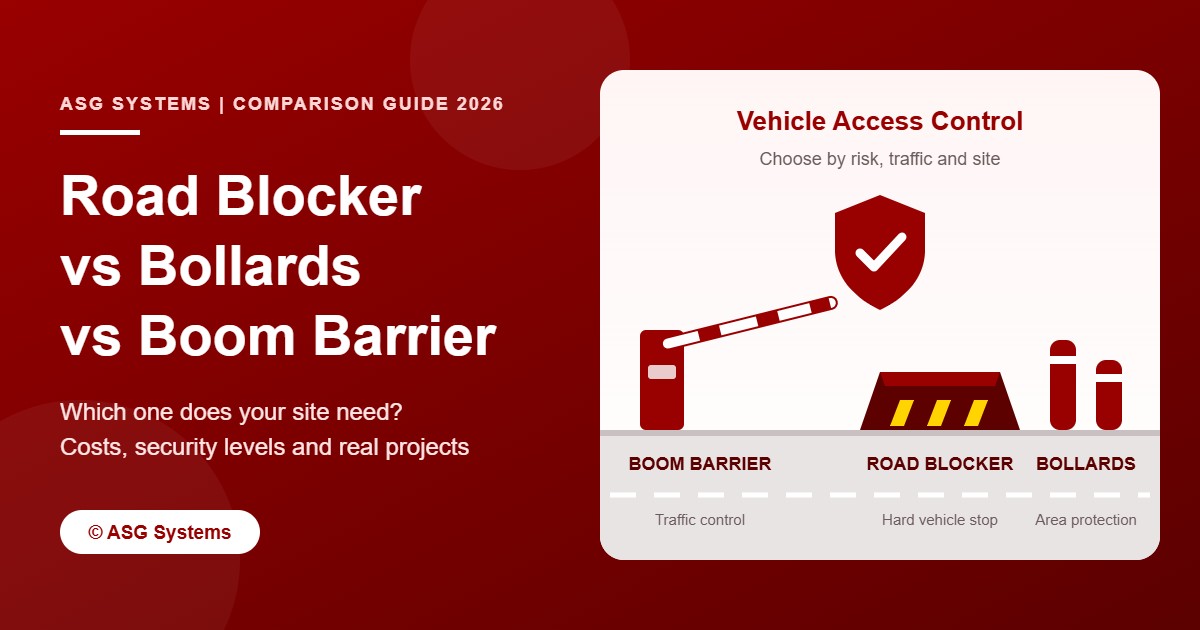
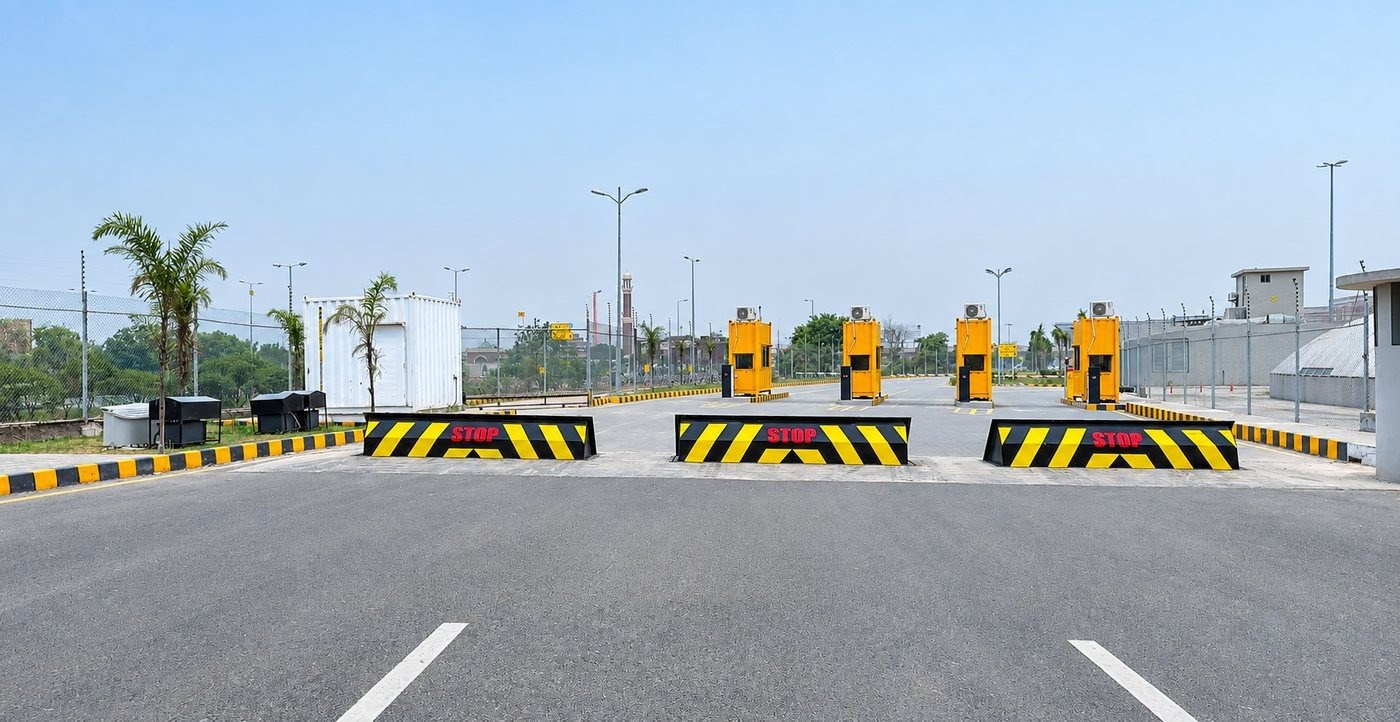
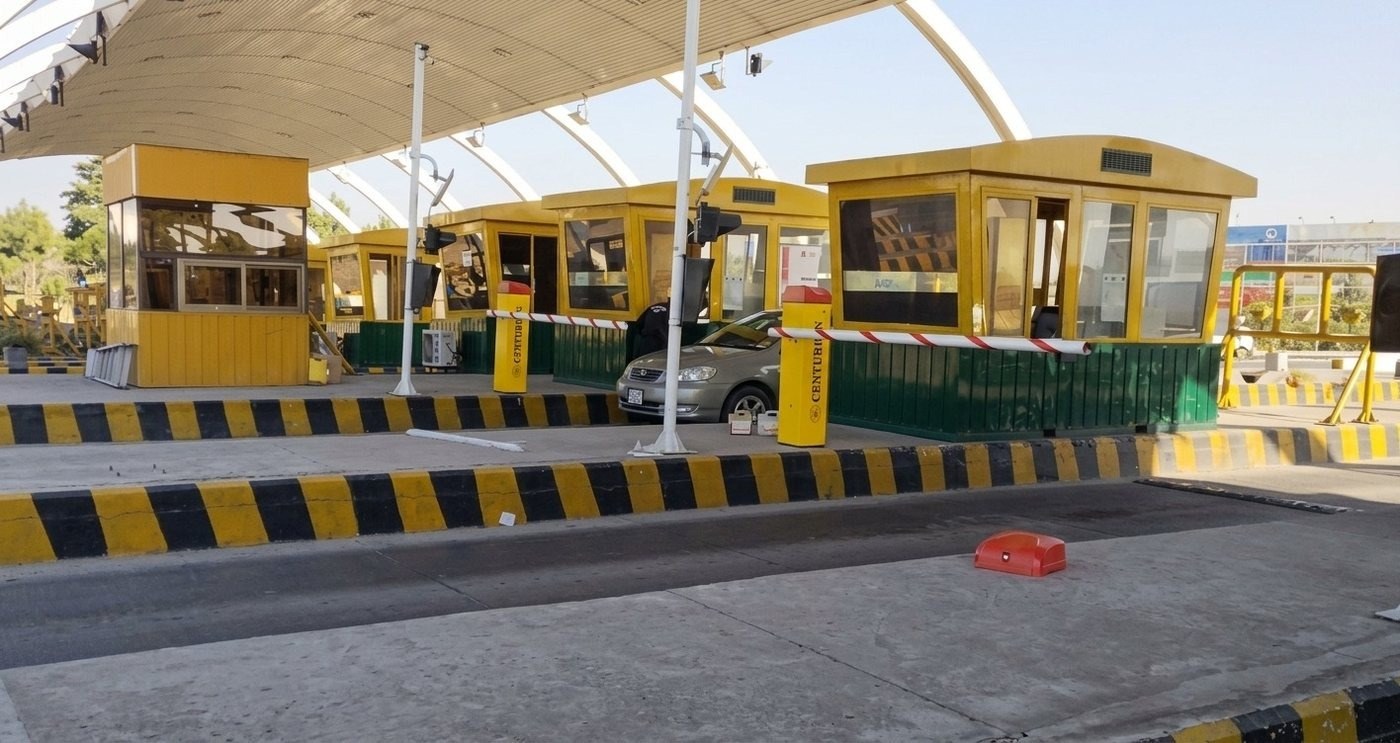
Bollards are ideal where you want a clean look, pedestrian access between the posts and strong vehicle control. A hydraulic road blocker is a solid plate that rises across the whole lane and is often stronger for the money at high-security gates. A boom barrier controls traffic but does not physically stop a vehicle. Many sites use all three together. For prices of the other two, see our guides to hydraulic road blocker price and boom barrier price in Pakistan.
How to save money without reducing security
- Use fixed bollards where vehicles never need to pass, and automatic bollards only in the lanes that open.
- Pay for a crash rating only where a security risk assessment shows it is needed.
- Plan the civil work and cable ducts during construction, when digging is cheaper.
- Choose one supplier for bollards, barriers and access control, so the systems work together without extra interfaces.
Bollards from ASG Systems
Since 1997, ASG Systems has supplied, installed and maintained vehicle security systems across Pakistan, with offices in Lahore, Islamabad and Karachi. We supply fixed, removable, automatic and crash-rated bollards, and we integrate them with road blockers, boom barriers, CCTV and access control as part of a complete vehicle access and entrance automation system.
Want an exact bollard price for your site? Send us the gate width, a photo of the entrance and how many vehicles pass each day, or contact ASG Systems for a free site survey and quotation.
Frequently asked questions
What is the price of a bollard in Pakistan?
It depends mainly on the type. Fixed steel bollards cost the least, removable and semi-automatic bollards cost more, automatic hydraulic bollards cost considerably more, and crash-rated anti-ram bollards are the most expensive. Civil work, controls and the number of bollards also change the total, so a site survey is needed for an exact quotation.
Are automatic bollards worth it?
Yes, where vehicles need to pass often and security matters. Automatic bollards let authorised vehicles in by remote, card or number-plate recognition while keeping others out, without a guard lifting anything by hand.
Do automatic bollards work during load-shedding?
They do if the system has a UPS or battery backup, which we recommend for every site in Pakistan. Many models also have a manual release so they can be lowered in an emergency.
What is a crash-rated bollard?
It is a bollard tested to stop a vehicle of a set weight at a set speed, under standards such as ASTM F2656, PAS 68 or IWA 14-1. It is used at high-risk sites such as embassies, government buildings and airports.
How far apart should bollards be?
A clear gap of around 1.2 metres between bollards is commonly used, so that cars cannot pass but pedestrians and wheelchairs can. The exact spacing should follow the site’s security design.

One Comment
Comments are closed.